Will My Insurance Go Up if My Parked Car Gets Hit
If the other driver is clearly at fault, a claim against their insurance usually won't raise your rate at all.
Fault, not the fact of a claim, decides whether you pay more
Insurers raise your rate when they believe you're more likely to cost them money again. A parked car getting hit almost always means someone else caused the damage, and when fault is clear, the claim goes against their liability insurance, not yours. Their insurer pays for your repairs, and your own record stays clean because you didn't cause anything.
Problems show up when fault is murky or when you use your own collision coverage instead of chasing the other driver. If you don't have the other driver's information, maybe it was a hit and run, you may have to file through your own policy's collision or uninsured motorist coverage. That is a claim on your record, and depending on your insurer and your state, it can factor into renewal pricing even though you weren't driving.
Some states and some insurers treat not at fault claims more gently than others, sometimes called accident forgiveness or a not at fault exception. Whether that protection applies automatically or only after you ask for it depends on your policy, so check your declarations page or call your agent before assuming you're covered.
The other variable is how often this happens. One isolated incident rarely moves your rate much anywhere. A pattern of claims, even not at fault ones, can make an insurer see you as a magnet for cost even when you're not the cause, so repeated incidents are worth raising with your agent directly.
A shopping cart dent with no note left behind
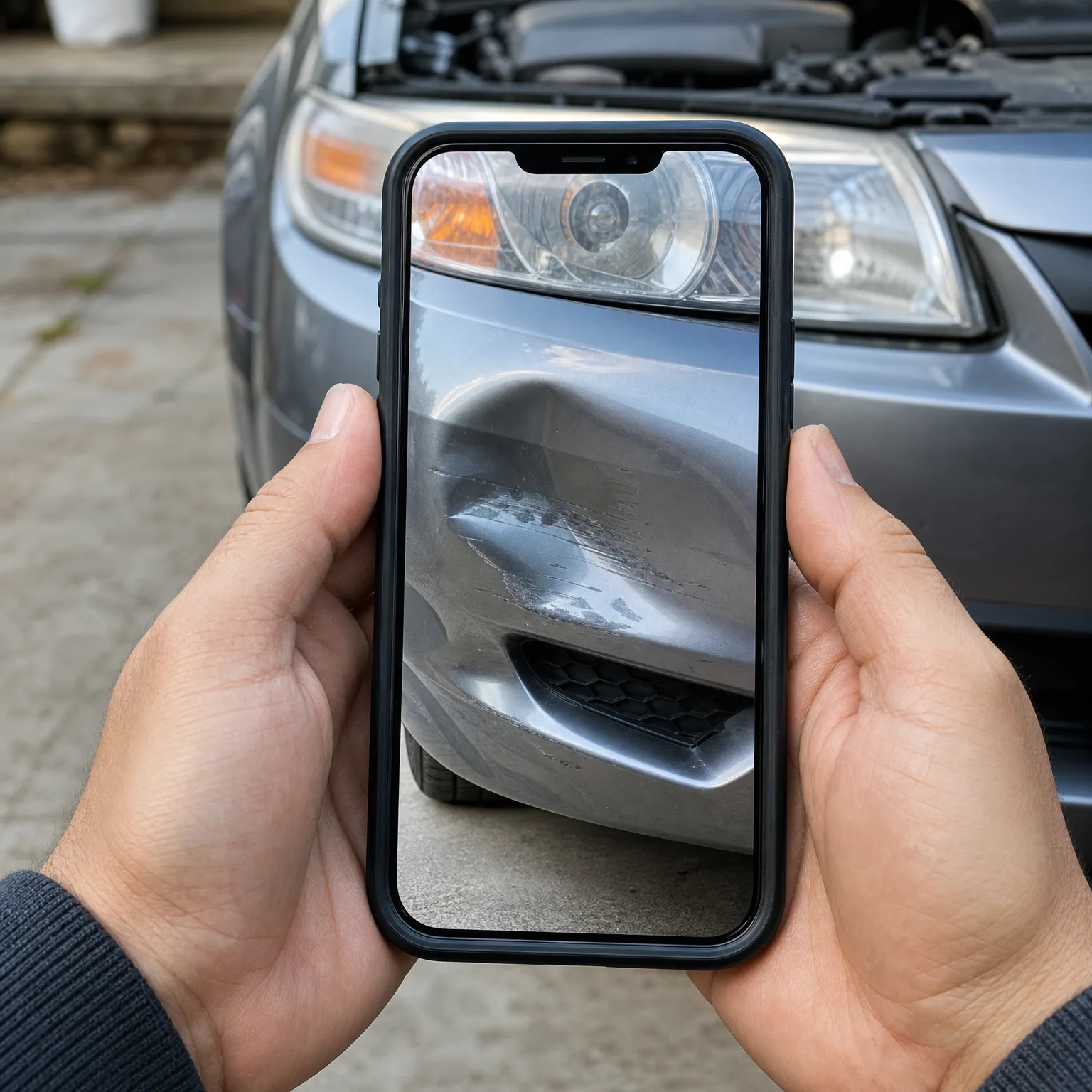
You come back to your car in a parking lot and find a crumpled rear panel. No note, no witness, nobody around. You're not sure if another car clipped you or something fell, and there's no way to identify who did it.
You call your insurer and explain there's no at fault party to pursue. They tell you this falls under your collision coverage since you can't file against another driver's liability. You pay your deductible, get the repair done, and the claim goes on file as a comprehensive or collision claim rather than a not at fault liability claim. At renewal, your agent confirms the claim was logged but didn't trigger a surcharge because your policy includes forgiveness for a first incident. Had this been your second claim in two years, the outcome might have looked different.

Whether you file through your insurer or the other driver's
If you do
If you file through your own insurer because you can't identify the other driver, your collision coverage pays after your deductible. The claim gets logged on your file. Depending on your policy and state, this may or may not affect your renewal rate, especially if it's an isolated incident and you have accident forgiveness.
If you don't
If you skip filing and pay for repairs yourself, nothing goes on your insurance record at all. This makes sense for small damage under your deductible, but you lose the chance to get reimbursed for larger repairs and have no documentation if related issues show up later.
Now that you know how a parked car claim is likely to affect your rate, compare quotes to see what you'd pay either way.

What actually determines the outcome here
- Fault determination If another driver is identified and at fault, their insurer pays and your rate shouldn't move. Get a police report or witness info if possible to establish this clearly.
- Hit and run situations No identified driver usually means filing through your own collision coverage. Check whether your policy has a not at fault exception before assuming a surcharge is coming.
- Your claims history One incident rarely matters much, but multiple claims in a short window can affect renewal pricing even without fault. Ask your agent how your insurer weighs this.
- State and insurer rules Not every state or company treats not at fault claims the same way. Pull up your policy's forgiveness terms or call to confirm before you file.
- Repair cost versus deductible If damage is close to or below your deductible, filing may not be worth it. Get a repair estimate first so you're deciding with real numbers.
Does filing a police report help my insurance claim for a hit car?
Yes, a police report helps establish that you weren't at fault and gives your insurer a record to work from, especially in hit and run cases. It documents the damage, time, and location, which supports your claim if the other driver is ever identified. Check with local police on whether they respond to parking lot incidents, since policies vary by city. Without one, your insurer may still process the claim, but having documentation makes the process faster and reduces any dispute over what happened.
Will my rate go up if I don't know who hit my car?
It might, because without an identified driver you typically file through your own collision coverage, and that claim gets logged on your record. Whether it raises your rate depends on your insurer's policy toward not at fault claims and whether you have accident forgiveness. Check your declarations page for this term. If this is your first claim in years, the impact is usually minimal, but repeated unidentified-driver claims can look different to an insurer over time.
Should I pay out of pocket instead of filing a claim for minor parking lot damage?
If the repair cost is near or below your deductible, paying out of pocket often makes more sense since filing wouldn't net you much after the deductible anyway. Get a repair estimate first to know the real cost. If the damage is significant and exceeds your deductible by a good margin, filing is usually worth it despite any small risk to future pricing, especially if you have forgiveness protections in place.