Who Is to Blame in a Rear End Collision
The driver who hits the car in front is almost always the one held responsible.
What decides fault after a rear end collision
- Following distance rule Drivers are expected to leave enough room to stop safely. If you hit someone from behind, that rule is the first thing an insurer points to.
- Sudden stops don't excuse it Even if the front car braked hard or stopped for no clear reason, the rear driver is usually still expected to have reacted in time.
- Brake checking changes things If the front driver stopped on purpose to cause a crash, that can shift fault. This is hard to prove, so dash cam footage or witnesses matter.
- Pileups split fault When three or more cars are involved, each driver can be partly responsible for hitting the car ahead of them. Your insurer looks at each impact separately.
- State rules affect your share Some states reduce or block your payout if you're partly at fault. Check how your state handles shared blame before you assume you're covered either way.
A driver stopped short at a yellow light and got hit from behind
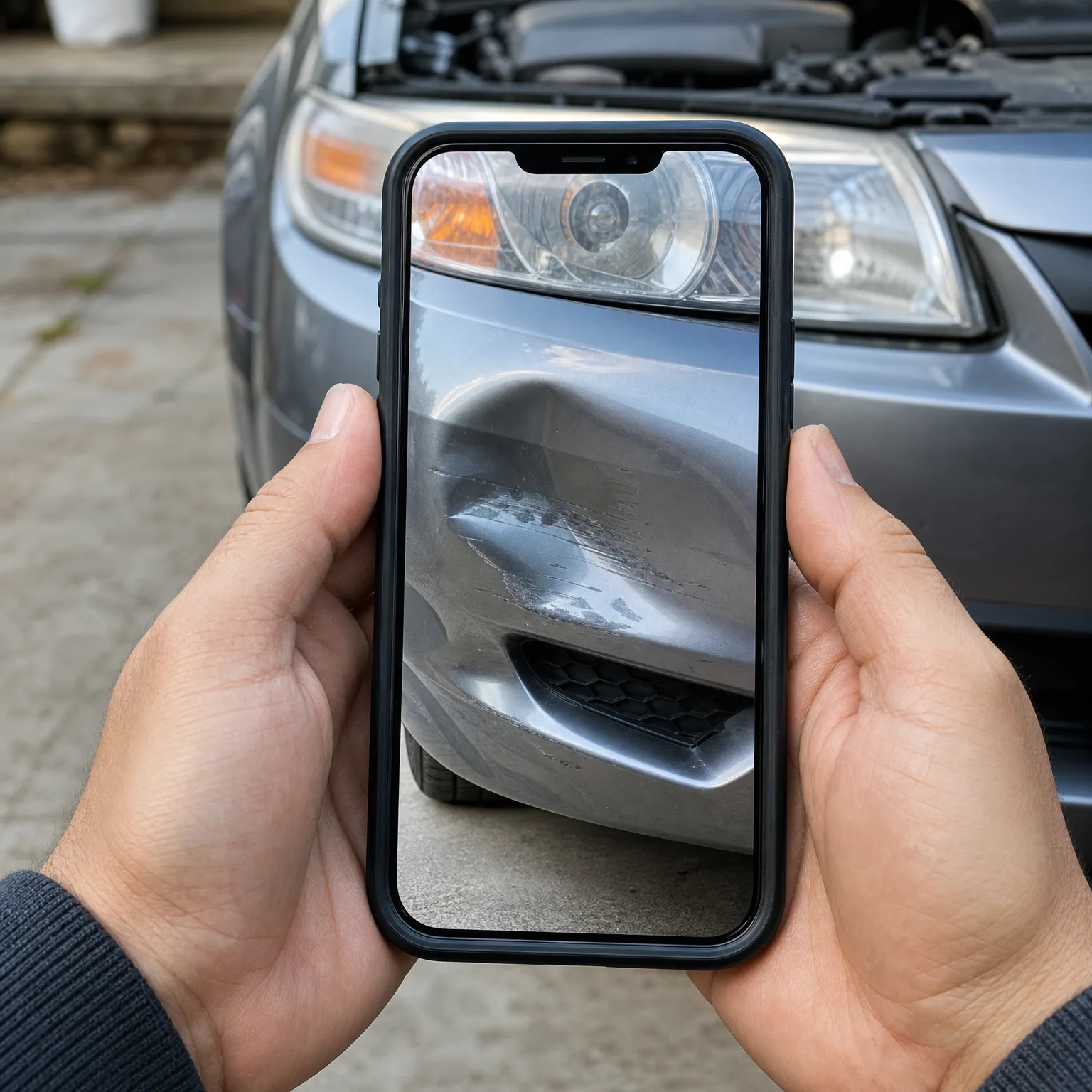
A driver was approaching a yellow light and slowed down to stop rather than speed through it. The car behind was following closer than it should have been and rear ended them. The front driver pulled over, took photos of both cars and the intersection, and called the police to file a report. The officer's report noted the rear driver admitted to being distracted by their phone moments before the crash.
When the claim was filed, the rear driver's insurer initially pushed back, suggesting the front car had stopped unnecessarily. But the police report, the photos showing clear skid marks only from the rear car, and the admission about the phone settled it. The rear driver was found fully at fault, and their insurer covered the repairs and medical costs for the front driver. The front driver's own rates were not affected because they were not found responsible for the crash.

Being rear ended doesn't mean you're fully covered. What you document in the moment decides that.
Once you know how fault works here, compare quotes to see how much a clean record is actually worth.
Can I still be partly blamed if I was hit from behind?
Yes, in certain situations. If your brake lights were broken, if you reversed suddenly, or if you stopped in a place no one would expect a stop, like the middle of a traffic lane without hazards on, an insurer can argue you contributed to the crash.
Fault doesn't have to be all or nothing. Many states allow it to be split, so you might be found partly responsible while the other driver carries most of the blame. That split can still reduce what you're paid out or raise your own rates, depending on your state's rules. This is why documenting the scene, your working equipment, and the conditions right after a crash matters even when you're confident you weren't the one who caused it.
Why the rear driver carries the blame almost every time
The basic expectation behind this rule is that driving is a chain of responsibility. Every driver is supposed to watch the car ahead and leave enough space and time to stop if that car slows down or stops. When a crash happens from behind, the assumption is that the rear driver failed at one of those two things, distance or attention. That assumption is strong enough that insurers and police often start there by default.
What changes the outcome is evidence that the front driver did something no reasonable driver would expect. A car reversing without warning, a driver flashing brake lights on and off to provoke a hit, or a vehicle stopped in a travel lane with no hazard lights can all shift some responsibility back. These cases are less common, and they usually require something concrete, a witness, a dash cam, or physical evidence like skid marks, because without proof it's just one driver's word against another's.
Multi car pileups work differently because each collision in the chain is treated almost as its own event. The car that hits the one in front of it can be found responsible for that specific impact, even if it was itself pushed forward by another car behind it. Insurers sort through this by looking at the order of impacts and the force involved, not just who ended up where.
State rules matter here more than people expect. Some states reduce your payout by your share of fault, and a few block you from recovering anything if you're found mostly responsible. None of this changes who's usually at fault in a simple rear end case, but it changes what a shared fault finding actually costs you, so it's worth checking your specific state's approach before assuming the outcome.
Does a rear end accident always raise my insurance rate?
Only if you're found at fault, fully or partly. If the other driver is responsible and their insurer pays, your own rate typically shouldn't move. Check whether your insurer counts not at fault claims differently, since a small number do track them even when they don't raise your premium.
What if the other driver claims I brake checked them?
This is why evidence matters immediately after the crash. Dash cam footage, witness statements, and the police report are what settle these disputes, since it otherwise becomes one account against another. If you have no proof either way, insurers often default to the standard rule that the rear driver was following too closely.
Will my insurer automatically side with me if I was hit from behind?
Not automatically. They still investigate, gather the police report, and may ask for photos or witness accounts before deciding fault. Being hit from behind makes you the likely favorite in that investigation, but it isn't a guarantee until the claim is actually reviewed and closed.