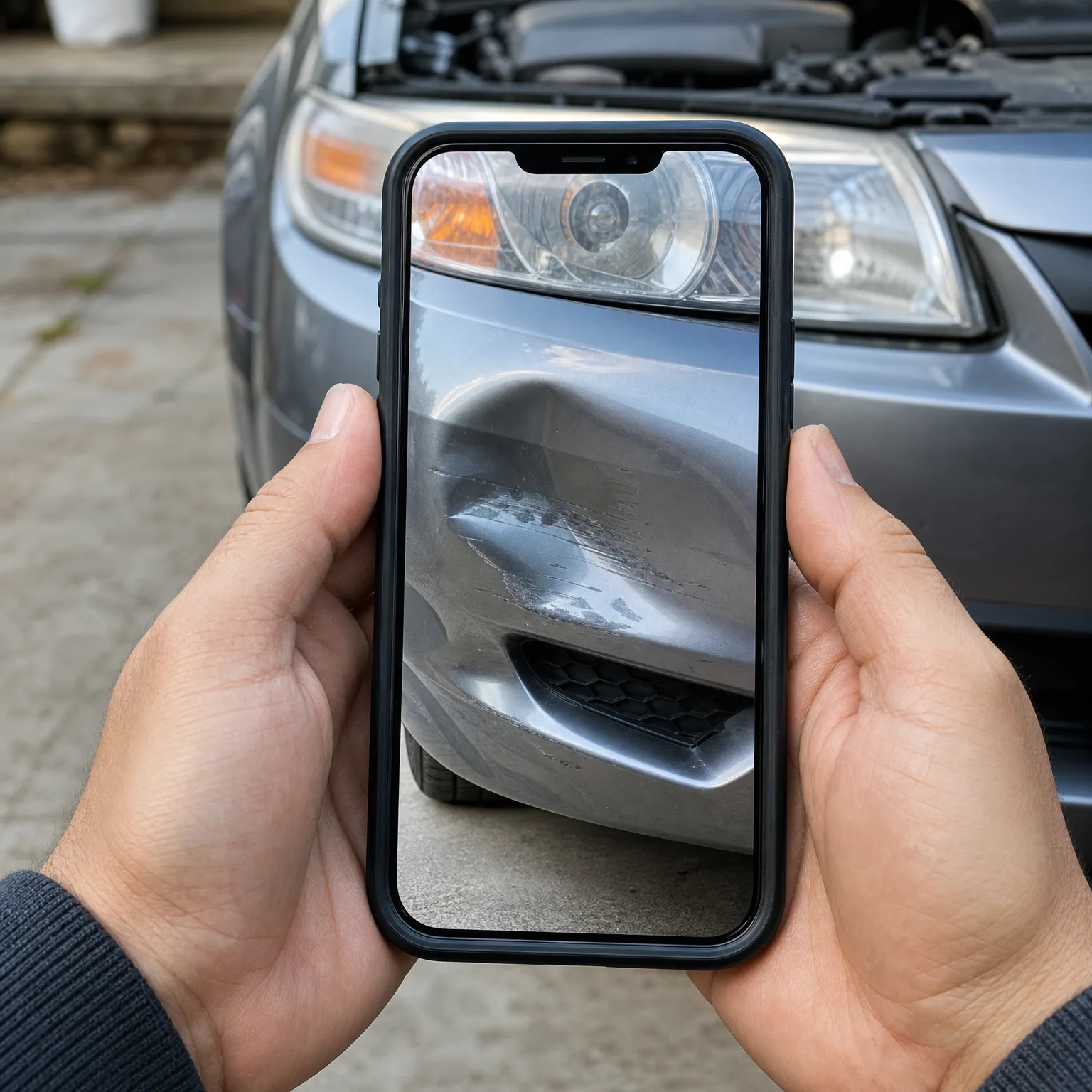
What Happens if I Do Not Tell My Insurer About an Accident
If your insurer finds out later, they can deny the claim, cancel your policy, or raise your rate anyway.

A fender bender you thought was too small to report
You back into a parked car in a lot, leave a note, and the other driver never calls you. No claim gets filed, so you decide not to mention it to your insurer since nothing seems to be coming of it. Three months later the other driver's insurer contacts yours for reimbursement, because repair costs ran higher than expected and they came looking for the other policy involved.
Your insurer now learns about the accident from someone else instead of from you, and that gap looks like concealment even though you meant nothing by it. They reopen your file, ask why it wasn't reported, and use the delay to question other parts of your driving history. The claim still gets paid, but your renewal comes with a higher rate and a note in your file that outlasts the accident itself. Reporting it yourself, even without filing a claim, would have closed the matter in a single conversation.
Can my insurer drop me for not reporting an accident?
Yes, and it's one of the more common reasons a policy gets cancelled outside of nonpayment. Most policies require you to report any accident within a reasonable time, whether or not you plan to file a claim, and that requirement is part of the contract you agreed to.
If the insurer learns about the accident independently, through the other driver, a police report, or a repair shop, and finds no record of you reporting it, they can treat that as a violation of the policy terms. Depending on your state and insurer, that can mean non-renewal at your next term or cancellation mid-policy if the violation is serious enough. Reporting promptly, even a minor incident, is the simplest way to avoid this entirely.

Once you've reported the accident and know where your policy stands, compare quotes to see your next rate.

What reporting late or not at all actually costs you
- Claim denial If the other driver files against your policy and you never reported the accident, your insurer can deny coverage for the delay alone. Report any accident as soon as it happens, even if you don't think you'll need to file.
- Policy cancellation Insurers can cancel or decline to renew a policy when they discover an unreported accident, treating the silence as a bigger issue than the crash. Check your policy's reporting window so you know how much time you actually have.
- Higher rate anyway An accident that surfaces later often raises your rate more than one you reported promptly, since the insurer now questions your honesty along with your driving. Report early and the increase, if any, stays limited to the accident itself.
- Fraud flags on record A pattern of unreported incidents can get noted in industry databases insurers share, following you to future applications. Keep your own simple log of any accident, date and details, even small ones.
- Other insurer gets involved Even if you don't file, the other driver's insurer can pursue your policy for costs, which brings the accident to your insurer regardless of your silence. Assume any accident involving another vehicle will eventually reach your insurer one way or another.
Why insurers treat silence as the real problem
Your policy is a contract, and most contracts include a duty to notify the insurer of anything that could lead to a claim, not just claims you intend to file. That clause exists because insurers price risk based on what they know about you, and an accident changes that picture whether or not money ever changes hands. When you stay quiet, you're not avoiding the risk, you're just delaying when the insurer finds out about it.
The real damage usually isn't the accident itself, it's the gap between when it happened and when your insurer learned about it. Insurers read that gap as a sign you were hoping to avoid consequences, and they respond accordingly, often more harshly than they would have to the accident alone. A small, honest accident reported same week looks very different in your file than the identical accident surfacing months later through someone else.
There are cases where this plays out differently. Some single-car incidents with no damage to report and no other party involved may not trigger any notification requirement at all, depending on your policy and state. And if you do report promptly but choose not to file a claim, most insurers simply log it and move on, since prompt reporting without a claim rarely affects your rate the way an unreported accident does.
What matters most is checking your specific policy's language on reporting, since the timeframe and what counts as reportable varies by insurer and by state. When in doubt, a short call to report the basics costs you nothing and closes off every one of these risks at once.
Do I have to report an accident if it was not my fault?
Yes, fault doesn't change your duty to report. Your policy's reporting requirement is about notifying your insurer that an accident happened involving your vehicle, not about who caused it. Even if the other driver is clearly at fault, reporting protects you if they later dispute it or if their insurer contacts yours. Check your policy for the specific reporting window, since that applies regardless of fault.
Will reporting an accident without filing a claim raise my rate?
Usually not, since rate increases are tied to paid claims, not to the fact that an accident was reported. Insurers log the report in your file but typically don't adjust pricing unless you file and they pay out. Some insurers in some states do factor in reported-but-unfiled incidents, so check your policy's claims history language. If you're unsure, ask your insurer directly before assuming either way.
How long do I have to report an accident to my insurer?
It depends on your policy, which is why you need to check it rather than guess. Most require notification within a reasonable time, often phrased as promptly or as soon as practical, without naming an exact number of days. Some states set their own rules on top of the policy language. The safest approach is always to report as soon as the accident happens, regardless of what the minimum technically allows.