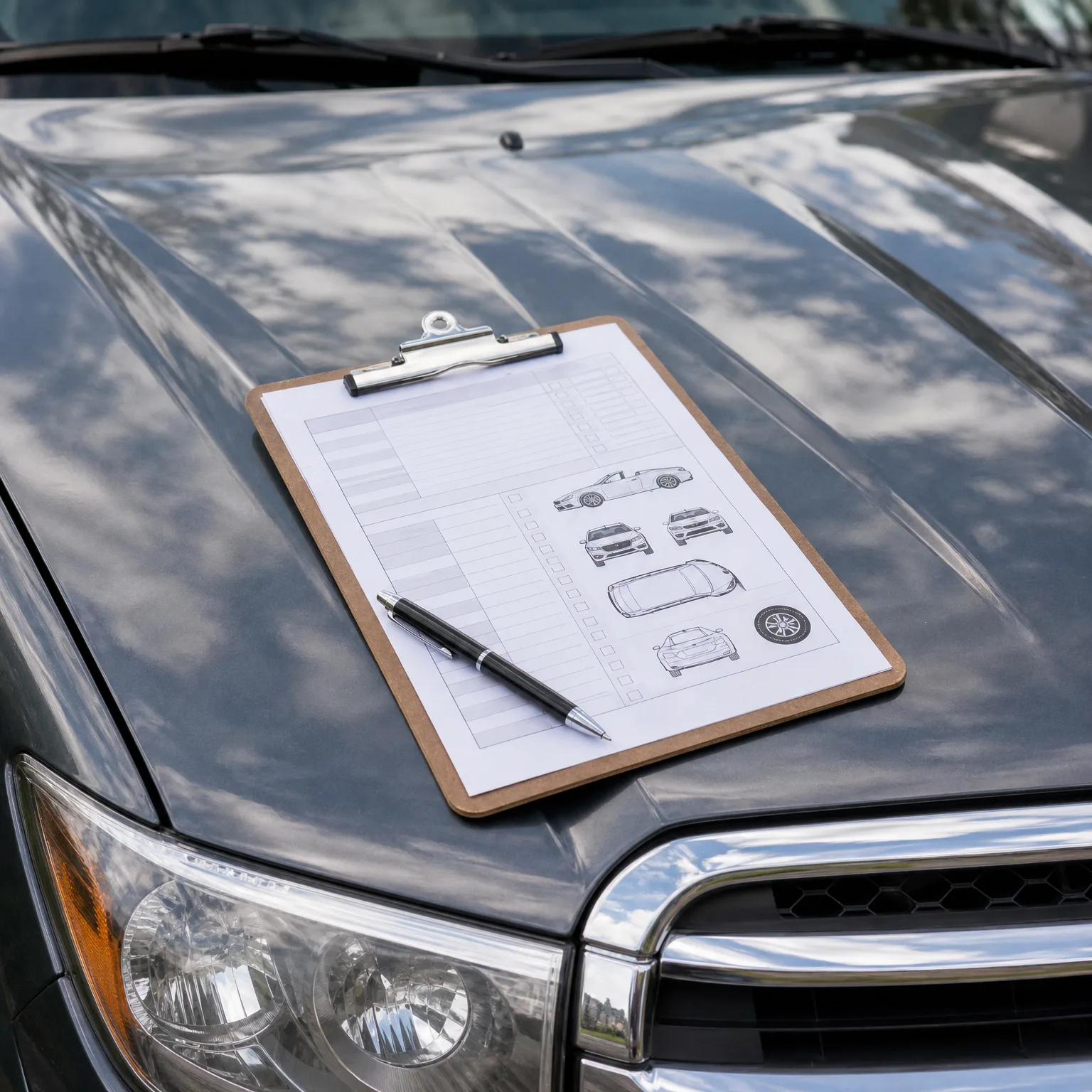
Does a Police Crash Report Say Who Was at Fault
Usually not directly. The report describes what the officer saw and was told, and insurers use that to decide fault on their own.
A Rear-End Crash With No Clear Fault Line on the Report
A driver was stopped at a light when the car behind struck her bumper. The officer arrived, took statements from both drivers, noted the damage, and wrote a report that described the positions of the cars and included a line that one driver admitted following too closely. Nowhere did the report say who was at fault in plain words.
She sent the report to her insurer anyway, along with photos of the damage and the intersection. The insurer read the officer's account, noted the admission about following distance, and used that detail to place full fault on the other driver. The report itself never declared a verdict, but the facts inside it gave her insurer everything needed to make one. Her claim moved faster because the details were specific and the officer had documented them clearly at the scene.
If the Report Doesn't Say, Who Actually Decides Fault?
Your insurer does, at least for the purpose of your claim. Insurance companies employ adjusters who review the crash report, photos, damage patterns, statements, and sometimes traffic camera footage to form their own conclusion about who caused the crash. They are not bound by anything the officer wrote, though a clear, detailed report makes their job easier and often faster.
If you end up in a lawsuit, a judge or jury becomes the decider instead, weighing the same kind of evidence along with testimony. The report can be introduced as evidence in that process, but it still is not the final word. That authority belongs to whoever is resolving the financial outcome, whether that is an adjuster or a court.
Once you understand how fault actually gets decided, compare quotes to see how it affects your rate.
Why the Report Describes Instead of Decides
Police officers write crash reports based on what they observe and what the people involved tell them in the moments after a collision. Their job at the scene is to document, not to judge. They note vehicle positions, weather, road conditions, visible damage, and statements from drivers and witnesses. Some officers will write an opinion about contributing factors, like speeding or failing to yield, but this is different from a legal determination of fault.
Fault, in the insurance and legal sense, is a conclusion drawn from evidence, not a label stamped at the scene. Insurers look at the same facts the officer gathered, but they apply their own standards and sometimes state-specific fault rules to reach a decision. This is why two people can read the same report and walk away with different expectations about what will happen next.
The process also varies because traffic laws differ by state, and some states use systems where fault is shared between drivers rather than assigned entirely to one person. In places like this, an officer's notes about who did what become even more important, because the percentage of fault assigned to each driver can directly affect what each insurer pays.
There are also cases where no report exists at all, such as minor crashes where police were not called. In those situations, insurers rely even more heavily on photos, statements, and any independent evidence to reconstruct what happened. The absence of a report does not mean fault cannot be determined, it just means the insurer has fewer official details to start from.
The report is evidence, not a verdict, so what you document at the scene matters just as much.
Can I get the crash report changed if I disagree with it?
Sometimes, but only for factual errors, not opinions about fault. If the officer misspelled a name, got a vehicle color wrong, or listed an incorrect time, most departments allow a correction request. If you disagree with how the officer described the crash or who they believe contributed to it, that is treated as opinion and is much harder to change. Check with the specific department that filed the report for their correction process, since procedures vary by location.
Does the report affect my insurance rate directly?
Not by itself. Your rate is affected by the fault decision your insurer reaches, not the report's wording. The report is one piece of evidence insurers use, but your own insurer's investigation, your claims history, and your state's rules all play a role. If the report contains a clear officer opinion about fault, it can influence the insurer's decision, which is where the indirect effect comes from.
What if the other driver's insurer blames me using the same report?
You can dispute it by providing your own evidence, including photos, witness contact information, or dashcam footage. Insurers sometimes reach different conclusions from the same report, especially if it lacks detail. Ask the other insurer what specific part of the report or evidence led to their decision, then address that directly. If the disagreement continues, your own insurer can negotiate on your behalf, which is one reason carrying your own coverage matters.